• Login
  • Work With Us
  • Contact
  • Login
  • Work With Us
  • Contact
SUBSCRIBE
Facebook Instagram
  • News
  • Local
    • Arts & Culture
    • Business
    • Community
    • Food
    • Opinion
    • Sports
    • Travel
  • Travel
  • Obituaries
  • E-Editions
  • Calendar
  • News
  • Local
    • Arts & Culture
    • Business
    • Community
    • Food
    • Opinion
    • Sports
    • Travel
  • Travel
  • Obituaries
  • E-Editions
  • Calendar
  • News
  • Local
    • Arts & Culture
    • Business
    • Community
    • Food
    • Opinion
    • Sports
    • Travel
  • Travel
  • Obituaries
  • E-Editions
  • Calendar
Search

B.C. frog relocation project aims to better understand conservation practice

The Canadian Press by The Canadian Press
September 24, 2023
in News, Home2
University of British Columbia master’s student Megan Winand holds a frog in this undated handout photo. Winand is one of the first to study the impacts of mitigation translocation, or the movement of animals from one location to “the next available habitat that is of the same or better value than where they came from.” THE CANADIAN PRESS/HO, Madeline Woodley

University of British Columbia master’s student Megan Winand holds a frog in this undated handout photo. Winand is one of the first to study the impacts of mitigation translocation, or the movement of animals from one location to “the next available habitat that is of the same or better value than where they came from.” THE CANADIAN PRESS/HO, Madeline Woodley

Almost every day this summer, University of British Columbia master’s student Megan Winand waded through wetlands with an antenna, following the beeping sounds to find Columbia spotted frogs.

Winand is one of the first to study the impacts of mitigation translocation, or the movement of animals from one location to “the next available habitat that is of the same or better value than where they came from.”

It is typically done as a conservation effort during construction or development projects, she explained.

The practice gained attention ahead of the 2010 Winter Olympics in Vancouver and Whistler, when the Sea-to-Sky Highway was upgraded andmore than 1,000 amphibians were carefully moved out of the construction zone. Among those animals was the red-legged frog, which is listed as a “species of special concern” in B.C.

Frogs are important because they are an “indicator species,” said Winand.

“They act as the canary in the coal mine, if you will. If the frog isn’t doing well, because it’s taking in whatever pollutants are from the air or the wetland itself, it’s likely because the ecosystem isn’t doing well.”

She also noted they are also “in the middle of the food web,” serving as a tasty snack for some animals, while feasting on lower-ranked species like insects and acting as a natural “bio control.”

Mitigation translocation has become increasingly more common in B.C. since the Sea to Sky project, but its impacts have been little studied, Winand explained.

“We don’t know a lot about the effectiveness of this,” she said. “We don’t really know what happens to them after we move them, and even globally there’s not a lot of published research around this type of translocation.”

That’s where her project began at the Mayook Wetland near Cranbrook, in southeastern B.C.

She spent the spring and summer using radio trackers and transponder tags that fit like tiny backpacks on the frogs to track their movements.

“What we’re doing is we’re capturing Columbia spotted frogs at this wetland and all of them are getting what’s called a PIT tag, a passive integrated transponder tag,” she explained.

“Simply, it’s like giving your pet a microchip. There’s no battery in it. When you wave this wand over top of it, it gives you a series of numbers that are unique to that frog.”

The frogs were then divided into three groups, Winand said. Either she left them in their original habitat, which served as her control group, moved them a short distance of about one kilometre or relocated them a farther distance of about five kilometres.

Then, over the summer months, she documented their movement and recorded their measurements, including their weight and size.

“I just want to see if they’re growing, how they’re doing. I want to see if they’re in the same spot that I originally captured them or if they moved. All that kind of adds into my questions about movement and survival.”

The two-year endeavour is in partnership with Ducks Unlimited Canada and the B.C. Ministry of Water, Land and Resource Stewardship.

The project officially began in April, when she and research assistants began tagging frogs. Her field work continued throughout the summer, before concluding in August. Now, Winand is analyzing the field data.

While she said it’s too soon to predict the results, she hopes it begins to answer some of the ongoing questions about the “under researched” topic of translocation mitigation.

“My project is really just like the tip of a very large iceberg in understanding this topic. I’m just looking simply at survival and movement,” she said.

Once those basic questions are answered, Winand said researchers can begin to tackle harder ones, like the impacts such movement has on resource and food competition, disease and genetics.

“There’s still a lot to understand and I hope that this will just keep the momentum going for more people to invest in understanding this research topic.”

Tags: ConservationWildlife
The Canadian Press

The Canadian Press

Related Posts

Scott McInnis, MLA Columbia River-Revelstoke
News

MLA Scott McInnis rejoins strong Conservative team

Columbia River-Revelstoke MLA Scott McInnis announced today that he has accepted an invitation to rejoin the BC Conservative Caucus, signifying...

September 22, 2026
News

MP, MLA call for urgent action following deadly MVAs

A recent series of fatal collisions on the Trans-Canada Highway has prompted both federal MP Mel Arnold and provincial MLA...

September 13, 2026
Next Post
A huge concrete pour for the Bighorn Bridge east transition pier, at Kicking Horse Canyon Phase 4. (MOTI photo)

Highway 1 east of Golden closed for 11 days

Leave a Reply Cancel reply

Your email address will not be published. Required fields are marked *

Popular Posts

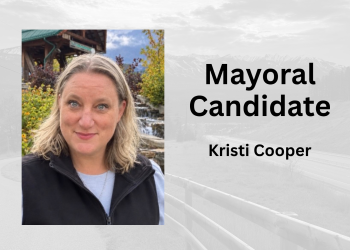
Updated: Meet Kristi Cooper, candidate for Mayor

October 7, 2026

Updated: Meet Wes Routley, candidate for Mayor

Turning Back the Pages: Golden came together to send cigarettes to soldiers

Updated: Meet Dustin Shanahan, candidate for Council

  • A little bit of everything in an October day in the mountains ๐Ÿ‚๐Ÿ”๏ธ
  • Power
  • Thank you to everyone who came out to celebrate, share stories, enjoy some good food and music, and mark this special piece of Goldenโ€™s history with us ๐Ÿ’›
  • Flashback Friday ๐Ÿ“ฐ Fall 2001!

Take a look back at these archival pages from the Golden Star and Golden News about the Kicking Horse Pedestrian Bridge.

Built in 2001 by volunteer timber framers and locals, this iconic bridge is Canadaโ€™s longest freestanding timber-frame structure and a true symbol of community connection.

Now, 25 years later, itโ€™s time to celebrate!

Join us at Spirit Square tomorrow evening (Saturday, Sept 26) to celebrate the 25th anniversary. See you there, Golden!
  • A pretty great way to celebrate 25 years! ๐ŸŽฌ๐Ÿฟ

The Princess Bride, popcorn, hot chocolate and a beautiful evening spent outside together. 

Thanks to the Golden & District Community for hosting such a fun night!
  • Itโ€™s officially Golden season ๐Ÿ‚๐Ÿ’›
  • News
  • Local
    • Arts & Culture
    • Business
    • Community
    • Food
    • Opinion
    • Sports
    • Travel
  • Travel
  • Obituaries
  • E-Editions
  • Calendar
  • News
  • Local
    • Arts & Culture
    • Business
    • Community
    • Food
    • Opinion
    • Sports
    • Travel
  • Travel
  • Obituaries
  • E-Editions
  • Calendar
SUBSCRIBE
  • Work With Us
  • Contact Us
  • Work With Us
  • Contact Us
Facebook Instagram

COPYRIGHT 2026 GOLDEN STAR

No Result
View All Result
  • Home
  • Landing Page
  • Support Forum
  • Buy JNews
  • Contact Us

ยฉ 2022 JNews - Premium WordPress news & magazine theme by Jegtheme.