• Login
  • Work With Us
  • Contact
  • Login
  • Work With Us
  • Contact
SUBSCRIBE
Facebook Instagram
  • News
  • Local
    • Arts & Culture
    • Business
    • Community
    • Food
    • Opinion
    • Sports
    • Travel
  • Travel
  • Obituaries
  • E-Editions
  • Calendar
  • News
  • Local
    • Arts & Culture
    • Business
    • Community
    • Food
    • Opinion
    • Sports
    • Travel
  • Travel
  • Obituaries
  • E-Editions
  • Calendar
  • News
  • Local
    • Arts & Culture
    • Business
    • Community
    • Food
    • Opinion
    • Sports
    • Travel
  • Travel
  • Obituaries
  • E-Editions
  • Calendar
Search

Hurricane Fiona highlights gaps in insurance as climate change worsens, experts say

The Canadian Press by The Canadian Press
September 28, 2022
in Canada & World, Home2, News
Arborists work to clear fallen trees and downed wires from damage caused by post-tropical storm Fiona in Halifax on Saturday, September 24, 2022. THE CANADIAN PRESS/Darren Calabrese

Arborists work to clear fallen trees and downed wires from damage caused by post-tropical storm Fiona in Halifax on Saturday, September 24, 2022. THE CANADIAN PRESS/Darren Calabrese

Many Atlantic Canadian homeowners may be on the hook for a significant portion of the damages to their homes caused by hurricane Fiona due to a lack of insurance covering flooding caused by storms.

Residential home insurance policies usually cover wind damage, including falling trees, and certain kinds of water damage, according to Amanda Dean, vice-president, Atlantic, for the Insurance Bureau of Canada.

However, they normally require an add-on policy in order to cover floods, she said.

These overland flood endorsements didn’t exist in Canada before 2015, she said, when an increasing number of flooding events made it clear that additional coverage was needed.

But even those flood policies don’t normally cover damages from storm surges, which are difficult for insurers to model as sea levels rise and coastlines erode, said Dean.

“Without accurate risk modeling, the risk is deemed too high to make the coverage affordable and/or available,” she said.

Some uninsurable damage to residential properties may be eligible for coverage under the federal Disaster Financial Assistance Arrangements program (DFAA).

There are gaps in the Canadian insurance industry when it comes to natural disasters, said Nadja Dreff, senior vice-president of global insurance at DBRS Morningstar.

Because of these gaps, “a large proportion” of the people affected by hurricane Fiona in Atlantic Canada likely won’t be fully covered for the damage to their homes, said Dreff.

The industry is trying to catch up even as these disasters become more frequent and unpredictable, she said.

The Co-operators Group Limited began offering storm surge insurance to homeowners in Atlantic Canada and British Columbia in 2018, according to news releases from the insurance co-operative.

The storm surge insurance includes rising water levels and waves caused by storms in its coverage.

“To our knowledge, Co-operators is the only Canadian insurer that offers storm surge protection,” said the agency’s vice-president George Hardy in a statement.

The insurance industry is “eager to continue working with government to create a national public-private insurance program for overland flooding that offers protection to all Canadians,” said Dean.

Dean said climate change has drastically increased the amount that insurers pay annually in severe weather-related claims.

Insurers in Canada currently pay on average more than $2 billion in claims related to severe weather annually, said Dean.

That’s compared to an annual average of $632 millionbetween 2001 and 2010.

DBRS Morningstar estimated hurricane Fiona will cause between $300 million and $700 million in insured losses in Atlantic Canada for a record high in the region.

The credit rating agency said in a report that that amount is roughly in line with previous natural disasters in other provinces such as the flooding in B.C. last year that saw $515 million in insured losses.

Atlantic Canada represents a small portion of the Canadian property insurance market, according to the report.

However, hurricane Fiona will likely go down as one of the region’s largest catastrophic events and more could be on the horizon.

Climate change is worsening the region’s risk to major storms like hurricane Fiona.

DBRS Morningstar said insurers may be more cautious when assessing risk in the region, likely raising premiums to cover the rising costs of payouts.

Dreff said as severe weather events become more common, insurers will raise premiums and work on more sophisticated risk modeling.

—Rosa Saba, The Canadian Press

RELATED: Flood of atmospheric rivers in B.C. cost $675 million in insured damage: bureau

RELATED: B.C. urges residents to check their fire, flood insurance this year

Tags: Climate changehurricaneinsurance
The Canadian Press

The Canadian Press

Related Posts

Scott McInnis, MLA Columbia River-Revelstoke
News

MLA Scott McInnis rejoins strong Conservative team

Columbia River-Revelstoke MLA Scott McInnis announced today that he has accepted an invitation to rejoin the BC Conservative Caucus, signifying...

September 22, 2026
News

MP, MLA call for urgent action following deadly MVAs

A recent series of fatal collisions on the Trans-Canada Highway has prompted both federal MP Mel Arnold and provincial MLA...

September 13, 2026
Next Post
Truth and Reconciliation day in Golden. (Claire Palmer photo)

How to honour Truth and Reconciliation Day in Golden

Leave a Reply Cancel reply

Your email address will not be published. Required fields are marked *

Popular Posts

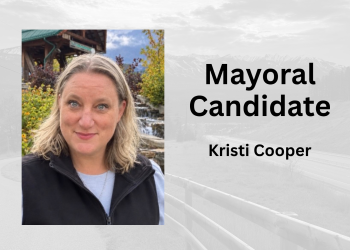
Updated: Meet Kristi Cooper, candidate for Mayor

October 7, 2026

Updated: Meet Wes Routley, candidate for Mayor

Turning Back the Pages: Golden came together to send cigarettes to soldiers

Updated: Meet Janet Crandall, candidate for Council

  • A little bit of everything in an October day in the mountains ๐Ÿ‚๐Ÿ”๏ธ
  • Power
  • Thank you to everyone who came out to celebrate, share stories, enjoy some good food and music, and mark this special piece of Goldenโ€™s history with us ๐Ÿ’›
  • Flashback Friday ๐Ÿ“ฐ Fall 2001!

Take a look back at these archival pages from the Golden Star and Golden News about the Kicking Horse Pedestrian Bridge.

Built in 2001 by volunteer timber framers and locals, this iconic bridge is Canadaโ€™s longest freestanding timber-frame structure and a true symbol of community connection.

Now, 25 years later, itโ€™s time to celebrate!

Join us at Spirit Square tomorrow evening (Saturday, Sept 26) to celebrate the 25th anniversary. See you there, Golden!
  • A pretty great way to celebrate 25 years! ๐ŸŽฌ๐Ÿฟ

The Princess Bride, popcorn, hot chocolate and a beautiful evening spent outside together. 

Thanks to the Golden & District Community for hosting such a fun night!
  • Itโ€™s officially Golden season ๐Ÿ‚๐Ÿ’›
  • News
  • Local
    • Arts & Culture
    • Business
    • Community
    • Food
    • Opinion
    • Sports
    • Travel
  • Travel
  • Obituaries
  • E-Editions
  • Calendar
  • News
  • Local
    • Arts & Culture
    • Business
    • Community
    • Food
    • Opinion
    • Sports
    • Travel
  • Travel
  • Obituaries
  • E-Editions
  • Calendar
SUBSCRIBE
  • Work With Us
  • Contact Us
  • Work With Us
  • Contact Us
Facebook Instagram

COPYRIGHT 2026 GOLDEN STAR

No Result
View All Result
  • Home
  • Landing Page
  • Support Forum
  • Buy JNews
  • Contact Us

ยฉ 2022 JNews - Premium WordPress news & magazine theme by Jegtheme.