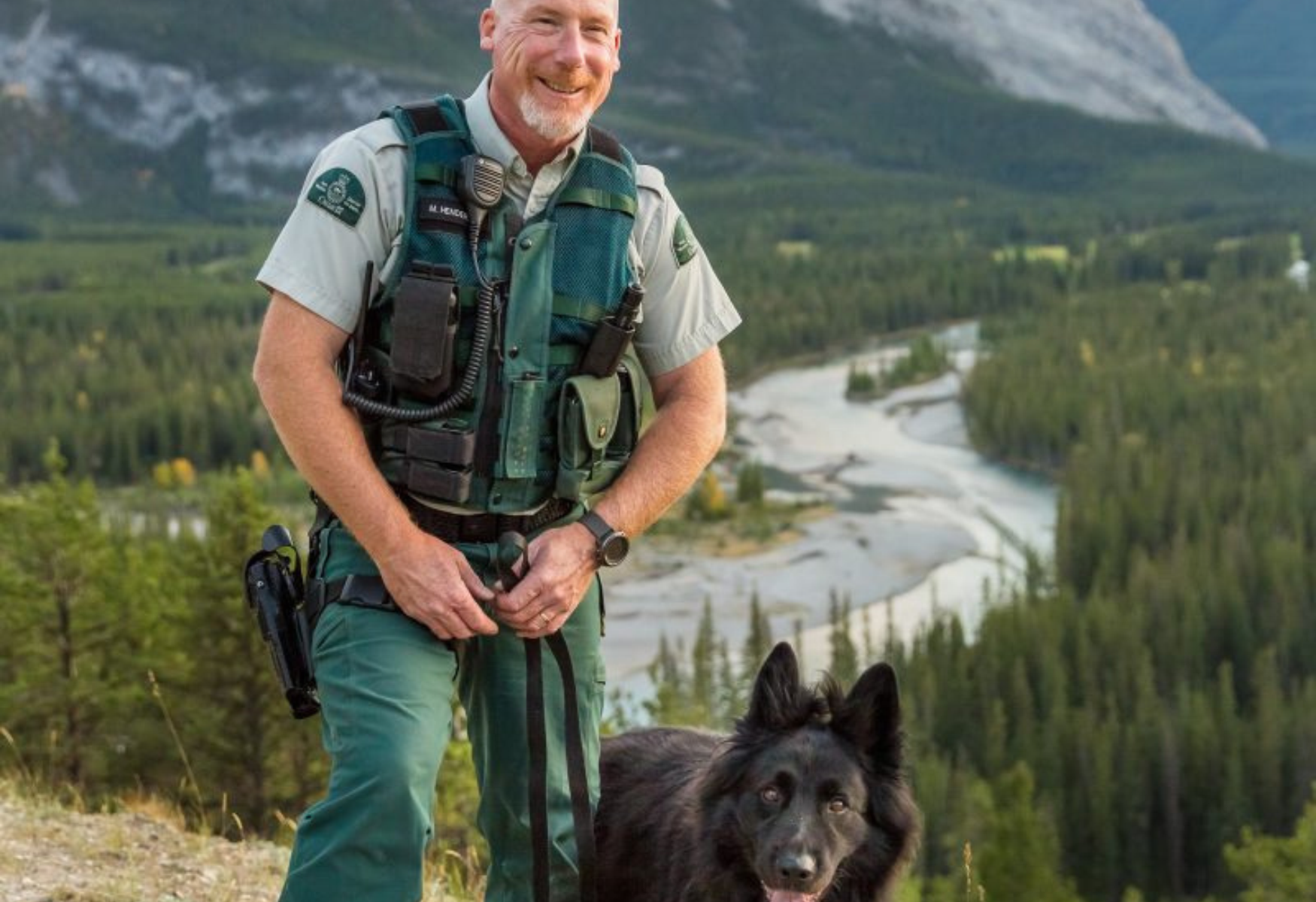
Cancellation of rescue dog program comes as Ottawa proposes another summer of free park admission
Parks Canada’s decision to eliminate its mountain search and rescue dog program is drawing warnings about public safety, as broader staffing cuts raise concerns about the agency’s ability to protect wildlife and respond to emergencies.
For Golden and neighbouring communities, the changes reach into the mountain parks that surround the region, including Yoho, Kootenay, Banff and Jasper.
The remaining Parks Canada dog team was based in Banff, but the program has a long history of supporting operations throughout the mountain national parks. Its work extended beyond avalanche searches to finding missing people, recovering human remains and assisting law enforcement, including anti-poaching operations.
The cancellation comes as Parks Canada implements approximately $145 million in spending reductions over three fiscal years. Its departmental plan identifies cuts of $24.6 million in 2026-27, $45.3 million in 2027-28 and $75 million in 2028-29. The agency says it will pursue internal efficiencies, adjust service delivery and reduce the frequency or scope of some visitor activities.
Approximately 500 full-time-equivalent positions are expected to be eliminated nationally. Nearly 3,000 employees have received workforce adjustment notices, although receiving a notice does not necessarily mean an employee will lose their job. Across Banff, Jasper, Lake Louise, Yoho and Kootenay, 536 employees received notices indicating their positions could change or be eliminated.
• Loss of specialized rescue capacity
The Canadian Avalanche Rescue Dog Association and British Columbia Search Dog Association have called on Parks Canada to reverse the cancellation, warning of consequences for both rescuers and the public.
CARDA president Kyle Hale has emphasized that trained dogs can help locate avalanche victims quickly, reducing the need for lengthy probing searches that expose rescuers to further avalanche danger.
The organizations also warned that losing Parks Canada’s role in training civilian dog handlers would affect rescue capacity beyond park boundaries. They said they understood volunteer teams would be expected to help fill the immediate gap, despite a lack of consultation before the decision.
Former Banff handler Mike Henderson has described duties that included monitoring illegal campsites, campfires, closures and poaching. The program once had six dogs, but had gradually been reduced to a single team in Banff.
• Concerns about poaching
The enforcement changes extend beyond the canine program.
Plans include closing at least 13 warden detachments and moving toward a regional enforcement model, with Banff and Jasper each losing a warden position.
Parks Canada spokesperson Meaghan Bradley has said the agency is redistributing enforcement capacity toward areas of highest priority and risk, while adding three regional intelligence coordinator positions. She said enforcement services would continue across all locations.
Retired warden George Mercer has warned that reduced enforcement capacity could give poachers greater opportunity to operate. His concern is that fewer officers stationed near parks will weaken the ability to respond when offences occur.
Parks Canada’s own 2023 evaluation had already identified resource pressures, finding that available resources had not kept pace with new parks, additional legislation and increasing enforcement expectations.
• More visitors, fewer staff
The reductions coincide with federal efforts to encourage Canadians to visit national parks.
Free admission and discounted camping were offered from June 19 to September 7 this year, following earlier summer and winter offers. Regular admission fees resumed September 8.
The 2026 federal budget proposes $76 million to renew the broader Canada Strong Pass program for another summer. The government reports that visits to Parks Canada sites increased by 13 per cent under the initiative, which also includes museum and rail travel benefits.
The budget separately proposes $3.6 billion over 10 years for Parks Canada’s capital assets. That infrastructure commitment serves a different purpose from funding day-to-day staffing and services.
The Public Service Alliance of Canada says employees handled the increased summer visitation without additional staffing or resources, and warns that further reductions could affect services and conservation.
For communities beside the mountain parks, the changes leave a pressing question: how will Parks Canada maintain rescue readiness and wildlife protection while Ottawa encourages more people to visit?