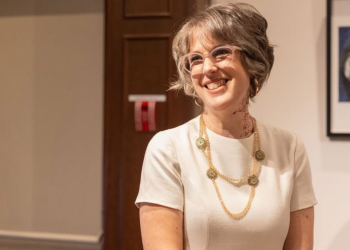
Dan Geddes, owner/operator of Dirtbag Climbing Corporation, is the president of Kicking Horse Country Chamber of Commerce.
When you hear the term “social purpose,” your mind probably jumps to charities, non-profits, or grassroots organizations, not private businesses. After all, isn’t business supposed to be about profit?
But to me, social purpose is much bigger than any single organization. It’s an increasingly essential responsibility for every individual and, by extension, every business. It’s about examining how we impact the world around us — not just how much we can extract from it.
That’s a big statement, so let’s narrow the focus: What is social purpose in business? Why does it matter? And how can you recognize or integrate it into the businesses you support, or into your own?
A System in Transition
We’re living in an era where attention, resources, and time are limited. Self-interest often shouts the loudest, and for a long time, our economic systems encouraged it. In the early days, there was plenty to go around — a whole pie to divide. But over time, each slice got thinner, and we began sacrificing key ingredients: the butter, the sugar, the cinnamon that made the pie worthwhile.
Eventually, all that’s left are a few apple slices dusted with flour — and we’re still trying to call it “pie.”
What happened?
We built systems that separated business success from social well-being. “Giving back” became an afterthought — something companies did once they had already extracted what they needed, often through token donations or marketing campaigns. Business thrived by taking, not by sustaining.
But now, we’re reaching a point where even the leftovers aren’t enough to sustain business-as-usual.
Understanding the True Cost
Businesses often prioritize cutting costs — wages, benefits, education, housing support — assuming those “social costs” disappear once they’re off the balance sheet. But costs don’t vanish; they just move further down the timeline.
When workers can’t afford homes, food, or basic healthcare, it doesn’t just hurt individuals — it creates a weakened economy that ultimately hurts businesses too. At that point, businesses typically react with surface-level charity efforts — solving symptoms, not causes.
The fundamental flaw? Trying to “give back” only after harm has already been done.
A New Standard: Purpose First
Boldly, I believe a business should not exist unless it has a social purpose at its core.
Today, if a business isn’t actively working to improve conditions for its clients, employees, and wider community, it risks falling into the worst patterns of capitalism — extraction, exploitation, and eventual collapse.
Most business owners aren’t malicious. But without a clear, forward-thinking social purpose, even good people are left competing in a race to the bottom.
Instead, we need businesses that create resilience — that build real value by investing in people and planet first.
How to Build (and Spot) Social Purpose
There’s no single model, but here are some starting points:
• Sliding Scale Pricing: Risky on the surface, but a powerful tool to engage a broader community, increase perceived value, and build lasting loyalty.
• Sustainable Resource Use: Businesses must examine their supply chains — buying locally and ethically whenever possible. If sustainable options aren’t available, maybe that’s the next business opportunity.
• Employee-Centered Policies: Living wages, healthcare, and food/housing security aren’t extras — they are necessities. These investments boost morale, output, loyalty, and the brand’s reputation.
• Internalizing Social Costs: Instead of donating to charities that address problems businesses help create, companies should aim to prevent those problems through their operations.
When businesses internalize social responsibility — seeing it as a foundational investment, not a marketing angle — the perceived and real value of their products and services rise dramatically.
• A Bigger Picture
We need to move away from seeing life, business, and community as separate categories.
The people earning paycheques are the same people keeping the economy alive through their spending. Cutting costs in one place only shifts the burden elsewhere.
Imagine if, instead of hoarding the last slices of a dwindling pie, we used our collective energy to bake more pies — together.
This isn’t about utopian dreams. It’s about practical, resilient systems. It’s about recognizing that there is enough for everyone — if we choose collaboration over competition, sustainability over short-term gain, and purpose over pure profit.
We don’t need a new doctrine — just a new depth of reflection in how we do business with each other. Maybe we can do a lot more, with a lot less.